

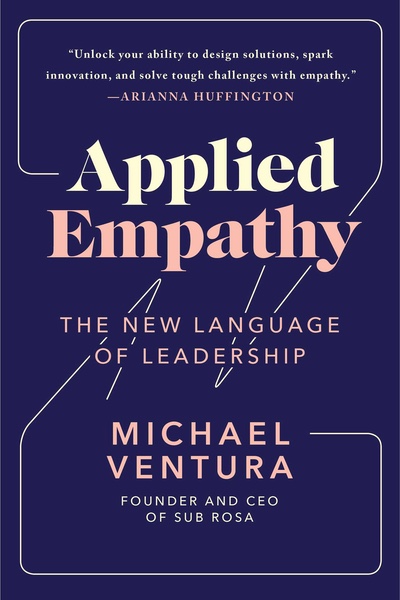
- Applied Empathy: The New Language of Leadership
- Author: Micheal Ventura
- Publisher: Simon & Schuster
- Publication: 2019
How can brands elevate empathy from a buzzword into a reliable, repeatable, and responsive tool for creating or capturing value?
EmApplied Empathy, Michael Ventura, founder and CEO of NY agency Sub Rosa, shares one solution for how businesses can apply empathy to find new and better ways of thinking, being, and doing.
Applied Empathy starts, as you might expect, with the skill of perspective taking – the ability to view a problem from perspectives other than your own, including those of your client, their customers and competitors. By shoe-shifting into the shoes of others, new possibilities and opportunities emerge. Shoe-shifting also dissolves tunnel thinking. Back in the
But how do you shoe-shift? The obvious solution is to experience for yourself what it feels like to be a customer. Ventura shares how GE learned this way that the room temperature for mammography machines in exam rooms (cold) was not the ideal temperature for patients (warmer). Basic stuff, but easy to miss unless you experience it first hand, or learn from someone who has.
There are many ways to take the perspective of the other, but one of Ventura’s solutions involves slipping into the persona of one of seven ‘Empathic Archetypes’. A little like de Bono’s six thinking hats, these Empathic Archetypes correspond to different core empathic skills.
The idea is that by slipping into the personas of one or more of the Empathic Archetypes you can get out of the subjectivity of your own head, role, or organisational hierarchy, and get into the subjectivity of the other. Basically, the Archetypes are a device to help you teleport into the shoes of the other, and see the world from their perspective.
Applied Empathy presents each Empathic Archetype with seven questions or prompts that can be used to channel and warm up your empathic muscles, or in interviews to get people to open up and to help you see the world from their perspective (these are also available as a deck of Q&E (Questions and Empathy) prompt cards

Empathic Archetype 1: The Sage
‘Be present’ (Inhabit the here and now)
- What is your purpose?
- Where do you feel most present?
- How has your past shaped who you are?
- What is a lesson you have imparted to others?
- When negative emotions arise, how do you deal with them?
- How do you stay grounded when the world gets overwhelming?
- How do you nurture yourself and your practice?
Empathic Archetype 2: The Inquirer
‘Question’ (Interrogate assumed truths)
- What do you most want to know?
- What personal biases interfere most with your finding truth?
- When have your instincts led you astray?
- Whom do you go to with tough questions?
- What do you continually ask yourself?
- What types of inquiries make you most uncomfortable?
- How does your body communicate?
Empathic Archetype 3: The Convener
‘Host’ (Anticipate the needs of others)
- Where is your favorite place to be a guest?
- How do you balance being self-serving and selfless?
- What makes an experience meaningful?
- Whom do you collaborate with best?
- What are a host’s greatest skills?
- What about you most comforts others?
- When do you bring people together?
Empathic Archetype 4: The Alchemist
‘Experiment’ (Test and learn at all costs)
- What motivates you to progress?
- What does approaching a breakthrough feel like?
- When does your curiosity create difficulty?
- Who has challenged you to be better than you once were?
- How does iteration inform the outcome of your work?
- What are the biggest sacrifices you’ve made?
- Where do you go to experiment?
Empathic Archetype 5: The Confidant
‘Listen’ (Develop the ability to observe and absorb)
- When is listening more valuable than
counseling ? - What role can silence play in a conversation
- How do you build trust?
- When have you breached a confidence?
- O que as pessoas deveriam entender melhor sobre você?
- Como você se protege?
- Quando você é mais observador?
Arquétipo Empático 6: O Buscador
‘Dare’ (seja confiante e destemido)
- Que erro você cometeria novamente?
- Como você explora seu eu interior?
- Quando o fracasso é produtivo?
- Quem inspira um senso de aventura dentro de você?
- Como a coragem se manifesta em seu trabalho?
- Quando a bravura se torna imprudente?
- Onde você vai para ultrapassar seus limites
Arquétipo Empático 7: O Cultivador
‘Comprometer-se’ (nutrir com propósito e crescer intencionalmente)
- Quais são as suas aspirações mais audaciosas?
- Como você constrói resistência?
- O que você deixa de fazer de propósito?
- Quem são seus parceiros de longo prazo?
- Que compromisso você assumiu consigo mesmo mais de uma vez?
- Quando a mentoria desempenhou um papel em sua vida?
- Onde você se sente mais nutrido
Empatia Aplicada e Propósito da Marca
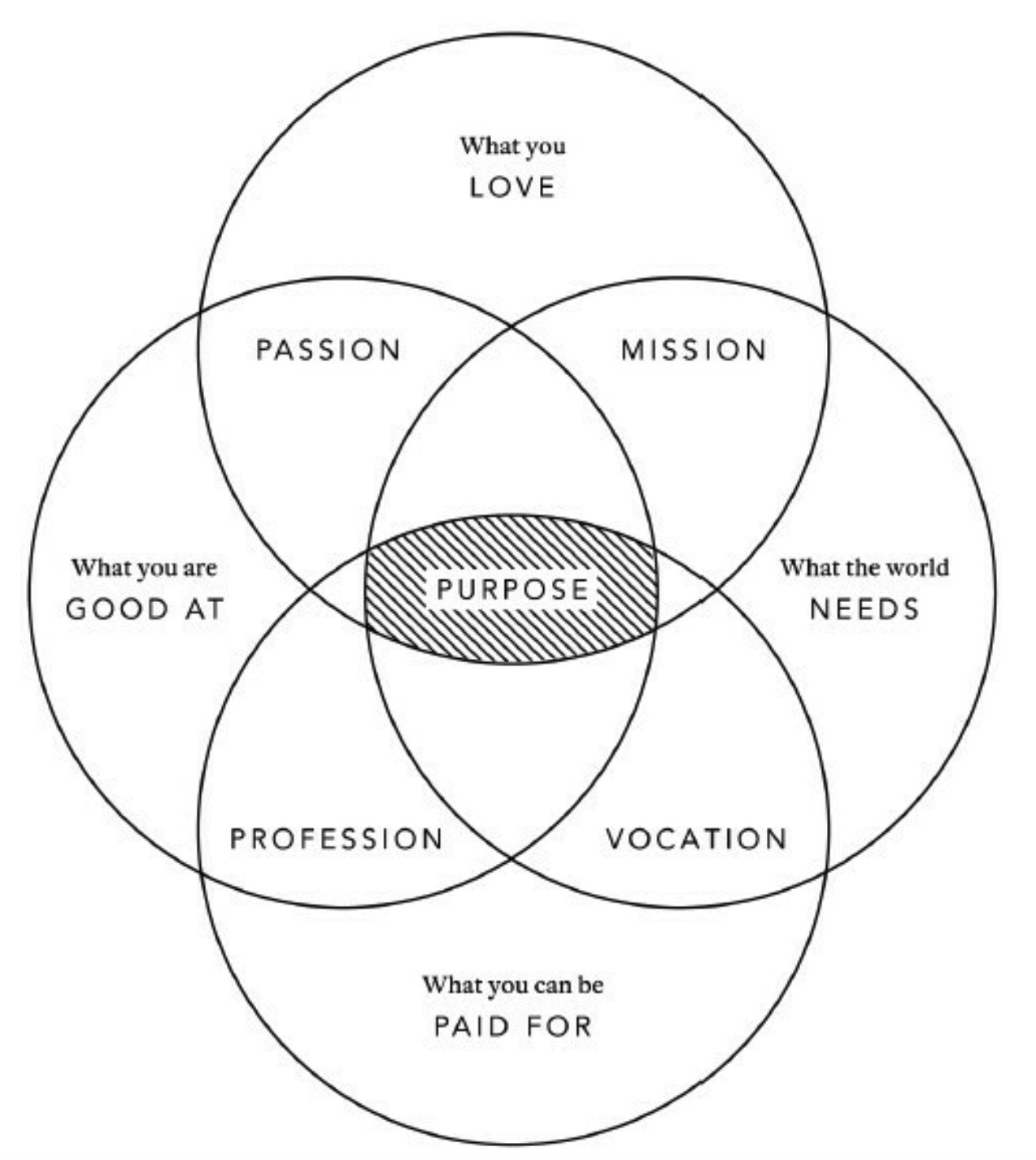
Além de aprimorar habilidades empáticas, Ventura propõe que a Empatia Aplicada nos negócios também deve consistir na criação de um propósito de marca que esteja na interseção de perspectivas entre o que as pessoas precisam, o que elas pagarão, o que você faz bem (como empresa) e o que você adora fazer. O ponto ideal empático que se encontra na intersecção é o seu propósito e é aqui que você encontrará o seu mandato orientado para o propósito e orientado para o desempenho. Para a Nike, é “trazer inspiração e inovação para todos os atletas do mundo”.
A tomada BG
A grande vantagem da Empatia Aplicada é que ele cumpre o que promete – este é um livro prático sobre como aplicar a empatia nos negócios. Não é um livro sobre empatia ou sobre a ciência da empatia. E nem é um livro sobre o poder da empatia; há poucas evidências concretas que validem o valor comercial da empatia. Em vez disso, o livro oferece uma abordagem testada sobre como uma agência (bastante bem-sucedida) aplicou a empatia para resolver problemas de negócios dos clientes. Para nós, BG, é uma leitura inspiradora e um estímulo criativo para desenvolver nossas próprias soluções para fazer inovação centrada no ser humano e liderada pela empatia.