
While 64% of consumers plan to use AI shopping assistants, 54% feel forced to ‘double-check’ the AI’s work, highlighting a profound crisis of trust.” (Gartner, 2026)
The Capability to Constrain
We have established that consumers are motivated to escape Choice Overload, and the digital environment has obliged by providing AI shopping agents.
But a new behavioural tension has emerged.
When you delegate a decision to a machine, you surrender your agency. If a consumer simply tells an AI, “buy the cheapest paper towels,” the AI will ruthlessly optimise for price. It won’t care if the brand is environmentally unethical or if the paper is uncomfortably thin.
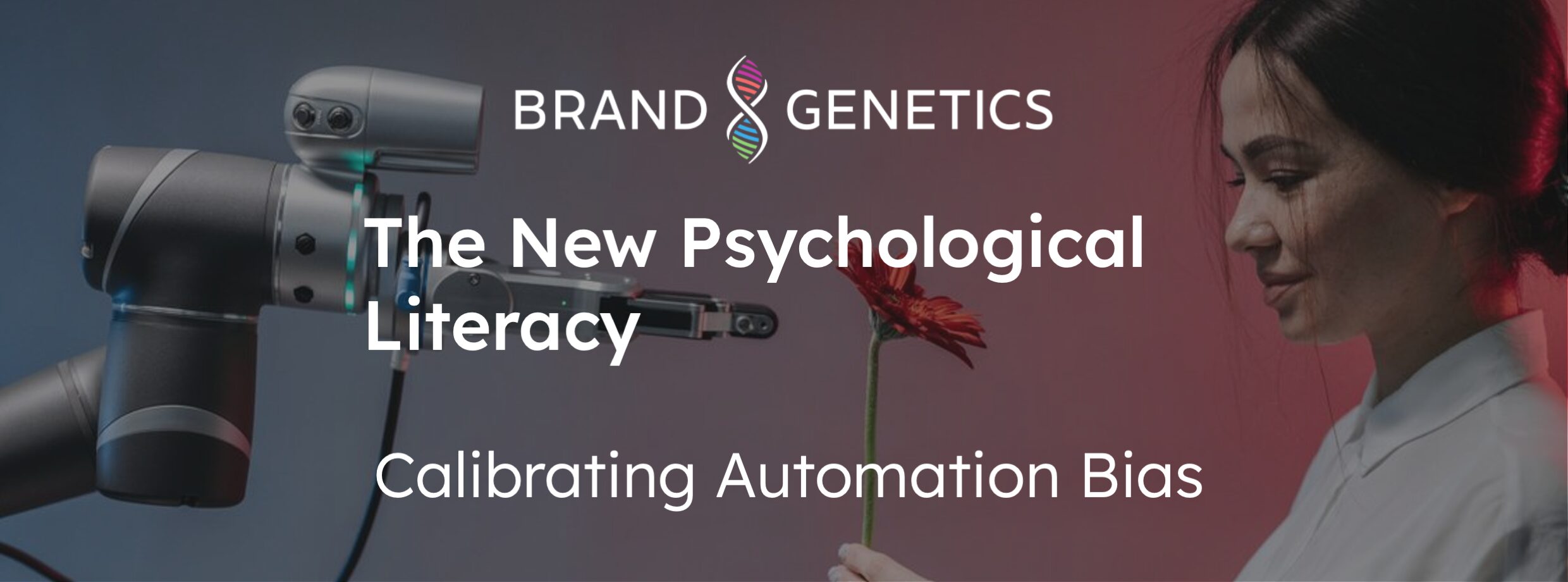
This leads to a psychological trap known as Automation Bias – the tendency to blindly trust the machine’s output because the alternative (thinking for yourself) is too exhausting. When Automation Bias takes over, the consumer doesn’t just lose their preference; the brand loses its premium. If the AI is only optimising for logic, premium features like “sustainability” or “brand heritage” are stripped out of the equation.
But consumers, particularly Gen Z, are fighting back. They are developing a new psychological Capability to survive the algorithm. They are learning to prompt for preference (Managed Agency).
Navigating the Trust Cliff
The modern consumer is highly paradoxical.
They want the AI to do the heavy lifting of evaluation, but they are deeply suspicious of its motives. They are standing on the edge of the “AI Trust Cliff” – the sudden drop in consumer confidence that occurs when an AI tool compromises authenticity or pushes a sponsored product over the right product.
A 2026 Harris Poll confirms this friction and found that a staggering 75% of consumers would immediately lose trust in an AI shopping agent if they discovered brands paid to influence its results.
To safely use these tools without falling victim to these issues, consumers are learning to encode their human desires into clear digital constraints.
They are learning to be active managers of the algorithm, commanding the AI to “find me a sulphate-free shampoo under £15, but exclude any brands that test on animals”, rather than asking AI “find me a shampoo?”.
The brands that win will be the ones that help consumers build guardrails effectively.
Bringing It to Life: L’Oréal’s BeautyGenius
Look at the beauty category. Skincare and makeup are deeply tied to human identity and self-esteem. It is an area where consumers are fiercely resistant to blind Automation Bias.
L’Oréal understood that they couldn’t just build a generic AI that said, “Buy this moisturiser.” In 2024, they launched BeautyGenius, an AI-powered personal beauty assistant that has since scaled into an integrated ‘Agentic AI’ tool.
It uses augmented reality and computer vision to diagnose skin, but crucially, it acts as a conversational partner. It allows the consumer to set the constraints—whether they have a severe skin condition, a specific budget, or a desired routine length. The AI does the exhausting work of filtering 750+ products, but the consumer retains the ultimate feeling of control. By providing a safe, transparent, and highly constrained environment for delegation, L’Oréal has reported significantly higher conversion rates and basket sizes.
So What? Choose Your Battlefield
If you want to survive the era of delegated decisions, you must help the consumer manage their Automation Bias:
1. Design for Dialogue: Your digital tools should not just deliver an answer; they should invite a conversation. Ask the consumer what they value (sustainability, speed, price) letting them govern the constraints AI uses in it’s search.
2. Transparent Trade-offs: When an algorithm recommends your product, ensure the “why” is visible. If your product is chosen because it is the most durable, but it costs slightly more, state it. Treat the consumer like the manager of the algorithm, and provide them with the transparent, honest data they need to make the machine work for them.
Uncover the underlying context that governs how your consumer’s navigate trust in your category with Brand Genetics.
This article decoded the Abilities behind AI-led choice, exploring the new psychological skills consumers must master to safely navigate algorithmic shopping without losing their agency. These new consumer skills are a direct response to a changing world. Understand the cognitive exhaustion that sparked this trend in Drivers, or explore the B2A platforms facilitating it in eNablers.