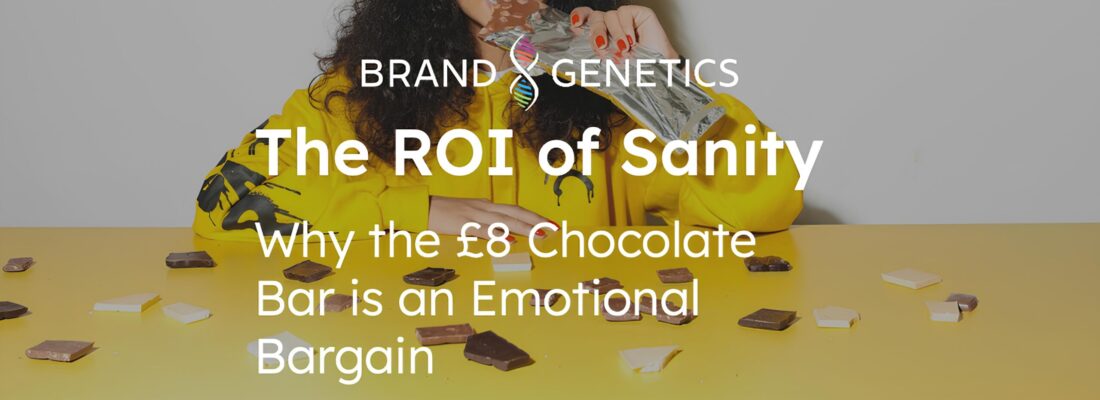
The ROI of Sanity: Why the £8 chocolate bar is an emotional bargain
Welcome to the era of the split-personality shopper
Right now, consumers are ruthlessly optimizing their grocery carts. They are pre-planning their aisles, trading down to standard private labels, and shaving pennies off their weekly essentials. Yet, in the exact same breath, these highly disciplined shoppers won’t hesitate to drop £8 on an artisanal chocolate bar or $4 on a premium functional soda.
To a classical economist, this looks like madness. But at Brand Genetics we know this isn’t irrational at all. It is a highly calculated response to a fundamental shift in human motivation.
Historically, marketers have viewed “impulse buying” as a failure of willpower – a momentary lapse at the checkout till. But as we navigate 2026, the spontaneous impulse buy is dying out. In its place, we are seeing the rise of planned indulgence.
While a modernized retail environment is eNabling easier trading down and consumers Ability to master their strict budgeting increases, the real story is what is Driving them. What is the deep psychological motivation pushing people to aggressively cut back in one aisle only to splurge in the next?
The answer: Emotional survival.
The Driver: The Search for Agency in a Polycrisis
We are living through a period of chronic macro-stress. Inflation fatigue, geopolitical instability, and an always-on digital culture have left consumers emotionally depleted. When major life milestones – like buying a house, taking a lavish vacation, or securing a comfortable retirement – feel increasingly out of reach, the human brain seeks out immediate, controllable wins.
Data confirms this motivational shift. According to recent consumer research, an incredible 62% of Americans now consider small indulgences an essential, non-negotiable part of their self-care routine (Circana). Furthermore, over half of Gen Z consumers explicitly state that they buy small treats precisely because larger financial milestones feel unattainable.
This behavior culminates in what financial analysts call “doom spending” – where 27% of consumers admit to sacrificing long-term goals to fund short-term retail therapy just to cope with stress (Credit Karma).
The primary motivation here is the restoration of agency and identity. Consumers are ruthlessly slashing their boring commodity bills (giving rise to the “Aldi-Brag“) to actively ring-fence their splurge money. They are buying the £8 chocolate bar because, relative to the cost of a therapist or a wellness retreat, it represents a phenomenal Return on Investment (ROI) for their daily sanity.
The “job to be done” goes way beyond just snacking, marking a full psychological reset.
The New Metric: Return on Guilt (ROG)
Because this spending is highly motivated by emotional regulation, the psychological stakes for premium brands are higher than ever.
When a consumer explicitly budgets for a splurge, they aren’t just looking for a quick dopamine hit – they are demanding guilt-free dopamine. This has created a new competitive threshold that we call the Return on Guilt (ROG).
If a shopper buys your premium product to treat themselves, but the experience leaves them feeling financially irresponsible, unhealthy, or morally compromised, the emotional ROI is destroyed. The product fails its core motivational job. To survive as a premium offering in a barbell economy, a brand must provide an airtight psychological alibi.
You must grant the consumer absolute permission to indulge.
The Science of the “Splurge-Permit”
How can brands satisfy this motivation? They lean into behavioural science. Professor Katy Milkman, a leading expert on behavior change, has extensively documented the power of temptation bundling – the practice of pairing a “want” (a guilty pleasure) with a “should” (a positive, goal-oriented behaviour) to drive action.
The brands successfully tapping into the Calculated Hedonist’s motivations are applying temptation bundling to their product positioning. They bundle the indulgence (the emotional treat) with a functional or ethical alibi (the rational justification), neutralizing the guilt equation entirely and satisfying the consumer’s motivation for consequence-free comfort.
Case Study 1: Olipop and the Functional Alibi
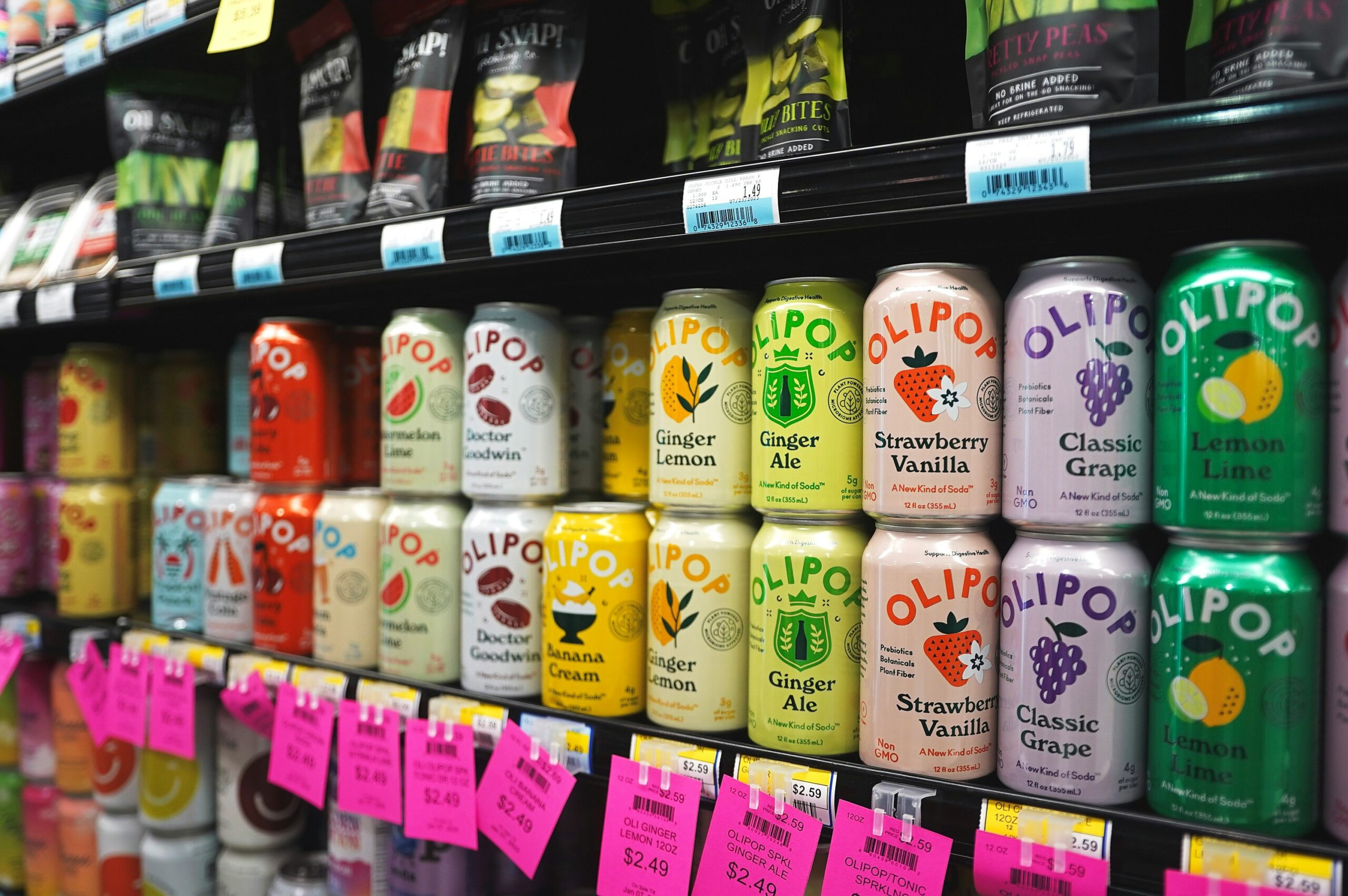
Consider the explosion of premium functional beverages like Olipop. Traditional soda is a pure indulgence, carrying a heavy tax of health-related guilt. Olipop directly taps into the consumer’s motivation for a daily treat, but brilliantly bundles it with plant fiber and prebiotics.
It transforms a “bad habit” into a “permissible indulgence” and a proactive gut-health investment. The consumer gets their much-needed daily sanity-treat, completely guilt-free.
The financial result of satisfying this specific motivational need? Olipop doubled its sales year-over-year in 2024, generating $400 million in revenue and securing a $1.85 billion valuation (Fooddive).
Case Study 2: Tony’s Chocolonely and the Ethical Alibi
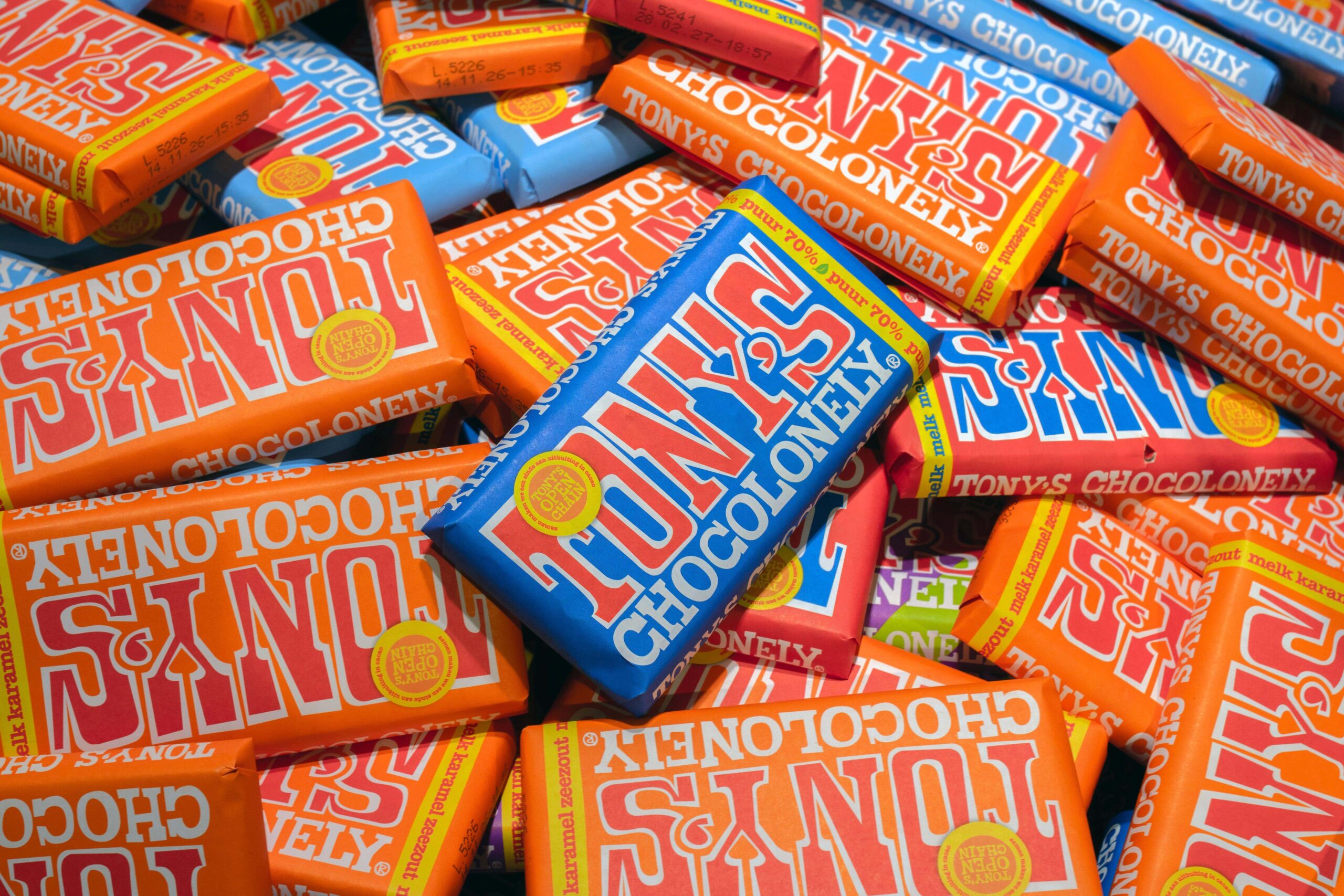
Tony’s Chocolonely commands a premium price point, yet it is growing explosively in a category that should theoretically be buckling under the pressure of inflation. Why? Because it directly appeals to the consumer’s motivation to protect their identity and values, offering an unimpeachable ethical alibi.
By actively campaigning to eradicate child labor in the cocoa supply chain, Tony’s gives consumers moral permission to spend more. You aren’t just eating chocolate; you are participating in a transparent social movement.
Driven by this clear purpose, Tony’s reported a massive 20% year-on-year revenue increase in its 2024/2025 fiscal year. (Confectionery production)
The Failure of the Squeezed Middle
In stark contrast, look at generic mid-tier FMCG brands – the standard, middle-of-the-road cookies, cereals, and snacks. These brands are currently hemorrhaging market share because they fail to satisfy the new motivational reality. They offer no functional health benefit and no ethical crusade, and they aren’t cheap enough to compete with a discounter’s private label (InsideFMCG). They are trapped in the squeezed middle, entirely failing to clear the consumer’s Return on Guilt threshold.
So What?
Choose Your Battlefield
The psychological landscape of spending has permanently altered. Consumers are too fatigued, too prepared, and too fiercely budgeted for whim-based shopping to sustain your bottom line.
To unlock brand growth in 2026, align with this new motivation. Proactively choose your psychological battlefield. Be the frictionless, invisible utility brand that saves people enough money to fund their sanity, or be the undeniable, guilt-free reward they eagerly spend those savings on.
Give them joy. Give them an alibi. But whatever you do, do not leave them feeling guilty.
Sign up to Brand Genetics Newsletter below for monthly decodings of the shifts impacting your brand today